


Sustainability in Southern Africa: A region at the front line, and ahead of the curve

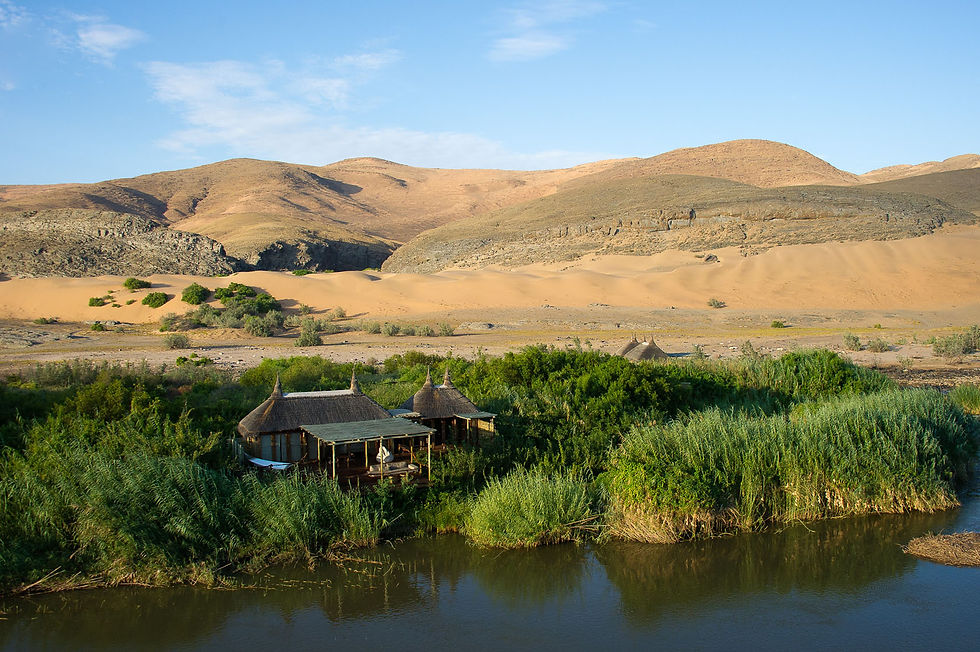
Southern Africa occupies an unusual position in the global sustainability debate. It contributes a small share of the world's emissions, yet it is warming faster than almost anywhere else on the continent. At the same time, it has produced some of the most admired conservation models on the planet. Understanding both sides of that story is essential for any business that operates here.
A climate already changing
The interior of Southern Africa has been warming at roughly twice the global average rate, a pattern climate scientists have documented for well over a decade. While the planet as a whole has warmed by about 1.1°C since pre-industrial times, parts of the region have already passed the 1.5°C threshold that international policy is still trying to avoid. The projections are sobering. The IPCC's Sixth Assessment Report indicates that a child born in Southern Africa in 2020 will face three to four times more heatwaves over a lifetime than one born in 1960, even if global warming is held to 1.5°C. Under higher warming scenarios, summer rainfall in the western parts of the region could fall by 10 to 20 per cent, and the average length of droughts could double from two months to four.
Conservation models the world studies
If the region faces acute pressures, it also offers some of the world's most instructive solutions. Namibia was the first African country to write environmental protection into its constitution at independence in 1990. Legislation in 1996 then allowed rural communities to form communal conservancies, giving them rights to manage and benefit from wildlife on their land. The results have been remarkable. From four registered conservancies in 1998, Namibia now has more than 80, covering over a fifth of the country and involving more than 220,000 community members. Annual income generated for communities grew from under US$150,000 in 1998 to more than US$5 million by 2019, much of it through tourism partnerships. Desert-adapted lions, reduced to fewer than 25 individuals in the mid-1990s, have recovered substantially, and Namibia now holds the continent's largest population of black rhino.
At a regional scale, the Kavango Zambezi Transfrontier Conservation Area (KAZA) links protected landscapes across Angola, Botswana, Namibia, Zambia and Zimbabwe. Covering roughly 520,000 square kilometres, it is home to an estimated 220,000 elephants, around half of Africa's remaining savanna elephant population. KAZA rests on a simple premise: that conservation, through tourism, can become the economic engine of the landscape.
What this means for tourism
Tourism sits at the centre of this picture. In Namibia alone, travel and tourism contributed an estimated 13.4 per cent of GDP in 2023, worth around US$1.7 billion. The sector's value rests almost entirely on natural capital: wildlife, wilderness, water and the goodwill of host communities.
Three priorities follow for operators and investors:
Water and energy systems should be designed for longer droughts and less reliable grids, not for the climate of twenty years ago.
The conservancy model demonstrates that conservation endures when communities benefit materially. Partnerships, local employment and procurement are strategic investments, not charity.
International tour operators and travellers increasingly expect credible evidence of sustainability, increasingly through GSTC-recognised certification.
Looking ahead
Southern Africa will continue to feel the effects of climate change more sharply than many regions. Yet it also holds clear advantages: abundant solar resources, globally respected conservation frameworks, and a tourism product that discerning travellers actively seek out. The businesses that thrive here will be those that treat sustainability as core strategy, building resilience into their operations and ensuring that the landscapes and communities they depend on prosper alongside them.
Sources for Article
Wits University: Climate change, South Africa and the latest IPCC assessment
Quartz: Southern Africa temperatures rising at twice the global rate
CDKN: IPCC Sixth Assessment Report regional factsheet, Southern Africa
weADAPT: IPCC AR6 impacts and adaptation for Southern Africa
SADC: Southern Africa drought, call for scaled-up assistance (Dec 2024)
WWF: Conserving wildlife and enabling communities in Namibia

Comments